
8 hr
Full-Day Mallorca Adventure: Train, Tram & Boat Experience
Journey through UNESCO mountain landscapes by vintage train, sail to stunning coves, and explore dramatic coastal gorges
Reserve

Hand-picked by our editors — only the best 5 experiences from 140 reviewed.
Verified partners for every tour, free cancellation where available, and instant confirmation on every booking.
8 hr
Journey through UNESCO mountain landscapes by vintage train, sail to stunning coves, and explore dramatic coastal gorges
Reserve
5 hr
Sail the stunning southern coastline, swim in secluded coves, and savor a freshly grilled meal onboard
Reserve
2 hr
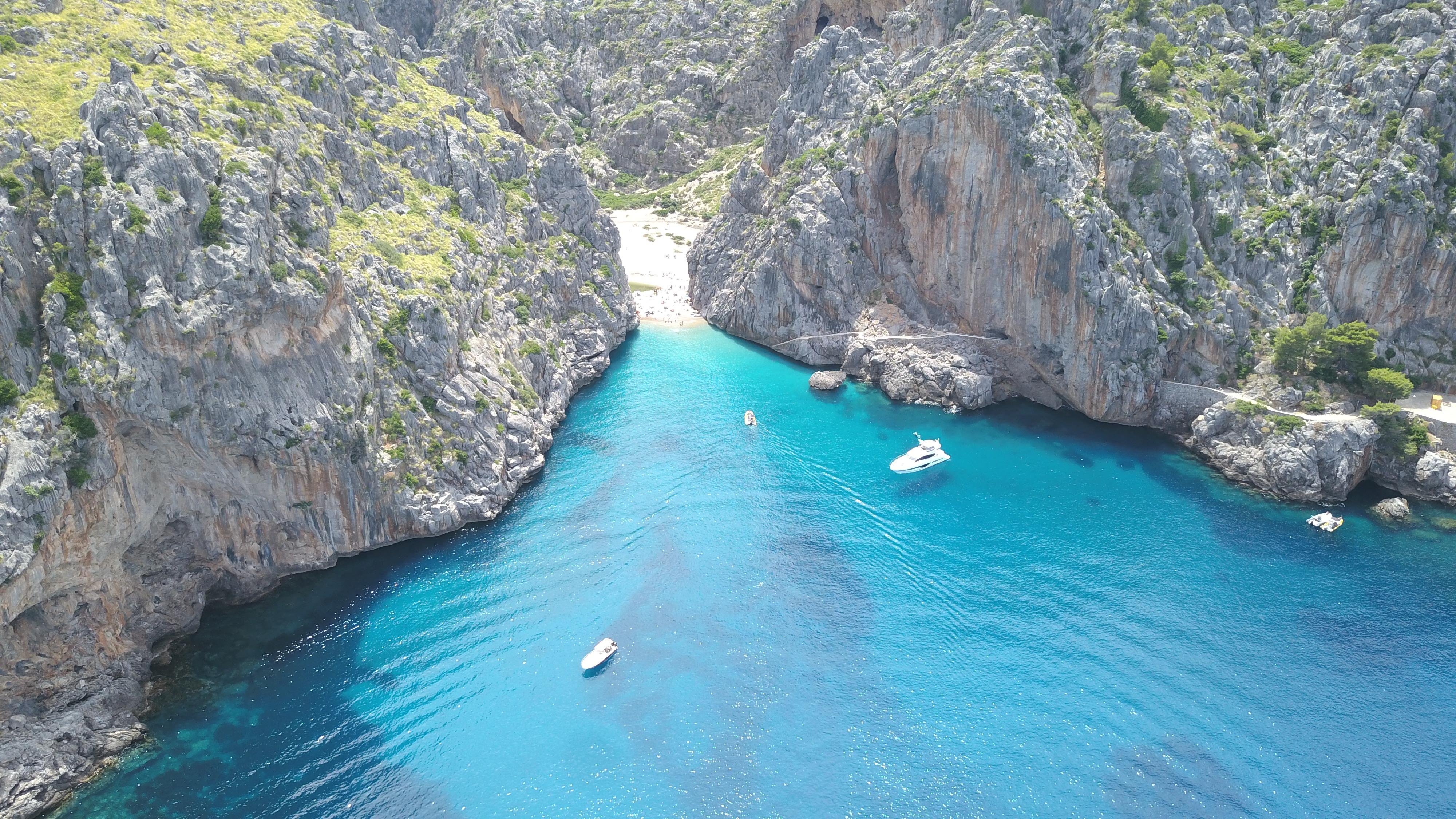
Discover hidden coves and dramatic coastline along Mallorca's stunning Tramuntana range by speedboat
ReservePrices from verified partners. Availability updates in real time at checkout. Free cancellation policies apply where shown.
The landmarks, rooms, and views travelers on this tour remember — all visible on a single visit.
A former Carthusian monastery where Frederic Chopin famously resided for a winter. It features historic cells and a beautiful garden.
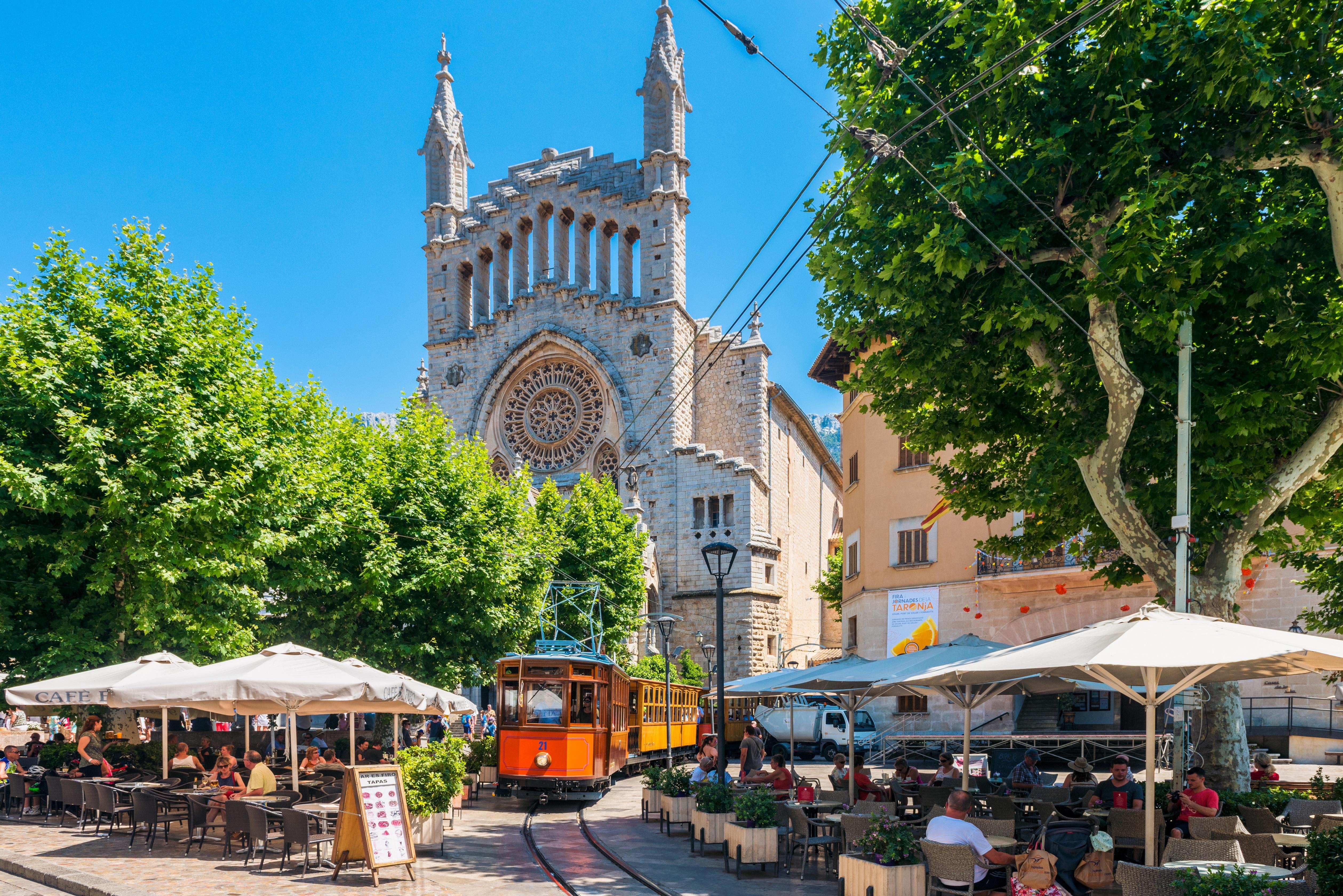
The historic wooden tram connects the town of Soller to this beautiful harbor. It is a traditional way to experience local travel.
A classic building that houses art exhibitions and acts as the gateway to the train and tram lines. It is an architectural landmark.
These winding mountain roads offer views across the UNESCO-listed landscape. They are essential to the character of the tour.
The main square in Soller where the tram passes through. It serves as a central hub for visitors to gather.
Guided tours provide a stress-free experience for those who prefer organized transport, while independent driving offers the freedom to explore Serra de Tramuntana at your own rhythm.
| Feature | Top pick Guided Tour | Car Rental |
|---|---|---|
Ease of navigation |
Provided by driver | Requires local navigation |
Flexibility of pace |
Fixed itinerary | Fully customizable |
Parking challenges |
None (drop-off provided) | High in narrow streets |
Logistical overhead |
Minimal planning | High (rental and fuel) |
Total transport cost |
65–95 EUR (summer) | 40–120 EUR per day (summer) |
| See tickets → |
Verdict: Choose a valldemossa and soller tour with bus and tram if you prioritize relaxation, or opt for a car if you value total independence while navigating these Mallorca landmarks via valldemossa and soller tour with bus and tram tours and valldemossa and soller tour with bus and tram tickets.
Choose your ticket, select your date, and reserve in under two minutes. Secure checkout handled by our verified partner.
Instant confirmation by email, with a mobile voucher you can save offline. No printing, no queuing at a collection desk.
Arrive at the entrance, show your voucher on your phone, and walk in. Most tickets include priority or skip-the-line access.
Practical details for your visit straight from our verified partners — hours, access, rules, and how to get there.
Main road, Valldemossa
Central pick-up point for most tours
Use TIB buses from Palma to reach the villages.
Follow Ma-11 and Ma-10 routes; parking is limited in village centers.
Modest clothing is recommended when entering religious sites like the monastery in Valldemossa. Comfortable walking shoes are essential for navigating the steep, historic village streets.
Small daypacks are recommended as space on the vintage tram and local buses is limited. Security checks may occur at specific monastery or museum entrances.
Photography is permitted in outdoor village areas and most public spaces. Please respect privacy notices when capturing images of private residences or during religious services.
Many historic sections of the villages are not fully wheelchair accessible due to steep gradients and stairs. The wooden tram has limited capacity for mobility aids; confirm with the operator before travel.
Mobile phone use is encouraged for navigation and photography. Maintain low volumes on public transport to respect fellow passengers.
The tram journey is often a highlight for children. Strollers should be foldable to accommodate transport on buses and the vintage tram.
Local cafes serve traditional coca de patata in Valldemossa and fresh orange juice in Soller. Carrying a reusable water bottle is recommended during summer months.
Small pets may be permitted on buses at the driver's discretion. Pets are generally not allowed inside most indoor museum or monastery sites.
As of 2026, the valldemossa and soller tour with bus and tram remains a popular way to see the region. Always verify departure times at the stop before planning your return.
Best time to go, insider tips, nearby landmarks, and the cancellation fine print — flip through to skim what matters to you.
How crowds, weather, and events shift across the year.
Mild temperatures make walking comfortable. Flowers are in bloom across the mountain slopes.
Expect high temperatures and peak crowds. Arrive early to enjoy the best experience.
Cooler weather returns. Ideal for hiking and visiting historic sites without intense heat.
Quieter period with potential for rain. Tram schedules may be reduced during this time.
Small details that turn a good visit into a great one.
Secure your valldemossa and soller tour with bus and tram tickets well in advance during peak summer months. This ensures you have a seat on the most popular routes.
The heat in the Serra de Tramuntana can be intense. Carry sufficient water when exploring sites on foot.
Ensure all public transport tickets are properly validated before boarding buses. This avoids issues with local transport authorities.
Tram times change seasonally. Always confirm the final daily departure time for the valldemossa and soller tour with bus and tram before leaving your accommodation.
The bus is the most efficient way to travel between Valldemossa and Soller. It connects the two major points of the valldemossa and soller tour with bus and tram efficiently.
Keep noise levels down in the historic streets of Valldemossa. This preserves the tranquil atmosphere of the mountain villages.
Non-bookable sights within a short walk — free to visit, easy to pair.
A historic residence with beautiful architecture and local history.
Sculpture garden featuring various contemporary works.
Gothic-style church located in the heart of Soller.
Flexible, no hidden fees.
Full refunds are typically available if cancelled within the operator's specified window. Please note that the entrance fee for the general Serra de Tramuntana region is 0 EUR, though individual sites charge separate fees.
Hand-picked options within walking distance — pick a district for vibe, or a specific hotel for convenience.
Boutique hotel with mountain views.
Central location near the tram stop.
Self-catering options for longer stays.
The wooden carriages that rattle between Palma and Sóller were bought from a Belgian workshop in 1912, and most of them are still in service. That single fact explains much of the appeal of a valldemossa and soller tour with bus and tram: nothing here has been modernised into anonymity. The Ferrocarril de Sóller was financed by citrus growers who were tired of hauling oranges over the Coll de Sóller by mule. Their railway bored thirteen tunnels through the limestone. The longest runs 2,876 metres beneath the Alfàbia ridge. Valldemossa sits higher and older. The Carthusian monastery, the Real Cartuja, was founded in 1399 on the site of a royal residence built for the son of Jaume II. Spanish law dissolved the order in 1835. Within three winters the empty cells had a tenant: Frédéric Chopin arrived in November 1838 with George Sand, two children and a Pleyel piano delayed for weeks in customs. Sand wrote 'Un hiver à Majorque' about the experience, largely in complaint. Chopin finished the Preludes, Op. 28, in cell number four. The village has never quite escaped either of them. What holds the two settlements together is the Serra de Tramuntana itself, inscribed as a UNESCO World Heritage cultural landscape in 2011 — not for its peaks but for its terraces. Generations of dry-stone builders, working without mortar, cut the slopes into cultivable steps and threaded them with irrigation channels of Islamic design. The marge, the retaining wall, remains the defining architectural form of the range. Sóller's own wealth reads differently. Its merchants sent citrus to Marseille and returned with money and taste, which is why the Plaça Constitució carries a modernista bank façade by Joan Rubió, a pupil of Gaudí, alongside the fortress-like church of Sant Bartomeu. The tram is the last piece. Opened in 1913, it runs five kilometres from the town to Port de Sóller past garden walls and lemon trees, still on its original narrow gauge. Good Serra de Tramuntana village tours treat these as one continuous artefact rather than three attractions. Villages themselves cost nothing to enter, at 0 EUR, though the monastery and museums charge separate individual fees. A valldemossa and soller tour with bus and tram tour is, in the end, a way of moving through a working landscape at the speed it was built for.
"The marge — the mortarless retaining wall — remains the defining architectural form of the Tramuntana."
A step-by-step walkthrough of the visit — what you'll see, how long each stage takes, and the details that matter.
You leave early, inside the 08:00–10:30 arrival window, because Valldemossa's streets are narrow and the parking fills before the first coaches. The village opens at 08:00 and the light is still low on the ochre stonework. You walk up Carrer de la Rectoria on cobbles worn smooth, past doorways tiled with images of Santa Catalina Thomàs, born here in 1531. At the Cartuja you pay the separate site fee, step into cell four, and stand in front of Chopin's piano while someone plays a prelude in the next room. Then you drop north. The road unwinds through pine and terrace toward Sóller, and you arrive in a square where the church front looks carved from wet sand. You order a zumo de naranja pressed from fruit grown two fields away. Buy your ticket at the corner kiosk and wait for the tram — it comes with a bell and a wooden shudder, and you take a seat facing outward. The run to Port de Sóller lasts about twenty minutes. Lemon branches brush the windows. You get off at the harbour, walk the curve of the bay, and watch the light shift on the water before the return. Whichever valldemossa and soller tour with bus and tram you have reserved, the day ends the same way: back through the tunnels, the mountains going blue behind you.
The sites are open from 08:00–18:00 daily. You should plan your visit within these hours to ensure access to various monastery and museum sites.
Accessibility is limited in certain historic sections due to cobblestones and inclines. The vintage tram also has physical limitations for mobility aids.
Arrive between 08:00–10:30 to avoid peak crowds. This arrival window ensures you can find parking and enjoy the villages before bus tours arrive.
Entrance to the villages is 0 EUR, though museums and monastery sites charge separate fees. Check site-specific pricing for your valldemossa and soller tour with bus and tram.
Small daypacks are allowed and recommended for comfort. Avoid bringing large suitcases as space on the tram is very limited.
Yes, you may take photos in public areas. Please be mindful of privacy when photographing residential areas during your valldemossa and soller tour with bus and tram.
Modest attire is required for religious sites. Comfortable walking shoes are highly recommended for the uneven village streets.
Cafes are available in both towns for meals. Bringing a reusable water bottle is helpful during the valldemossa and soller tour with bus and tram.
Phones are allowed for navigation and photography. Please keep volume low while using public transport during the valldemossa and soller tour with bus and tram.